Independent retailer notice: Home Builder Blinds is an independent window-treatment retailer and is not affiliated with, endorsed by, or sponsored by D.R. Horton, Inc.. "D.R. Horton" is a trademark of its respective owner and is referenced here only to describe the kinds of production-built homes our blinds commonly fit. The window patterns below describe general production-home tendencies, not any builder's proprietary specifications. Always measure your own windows before ordering.
Window Sizes in D.R. Horton Communities
D.R. Horton builds at higher volume than any other U.S. builder — Express, America’s Builder, and regional Horton brands all depend on repeating the same window SKUs across floorplans and entire subdivisions. In DFW and nationwide, that means your Horton neighbors often share the same width families even when the elevation looks different.
- Bedrooms and secondary rooms: ~35" openings (34.5" blinds) on most Horton plans
- Townhome fronts: narrower 24"–32" windows on attached elevations
- Living areas: 47"–58" openings on many single-family and end-unit plans
- Sliding patio doors on most floorplans (usually left bare or fitted with roller shades)
- Same width often repeats on multiple floors in Horton townhome layouts
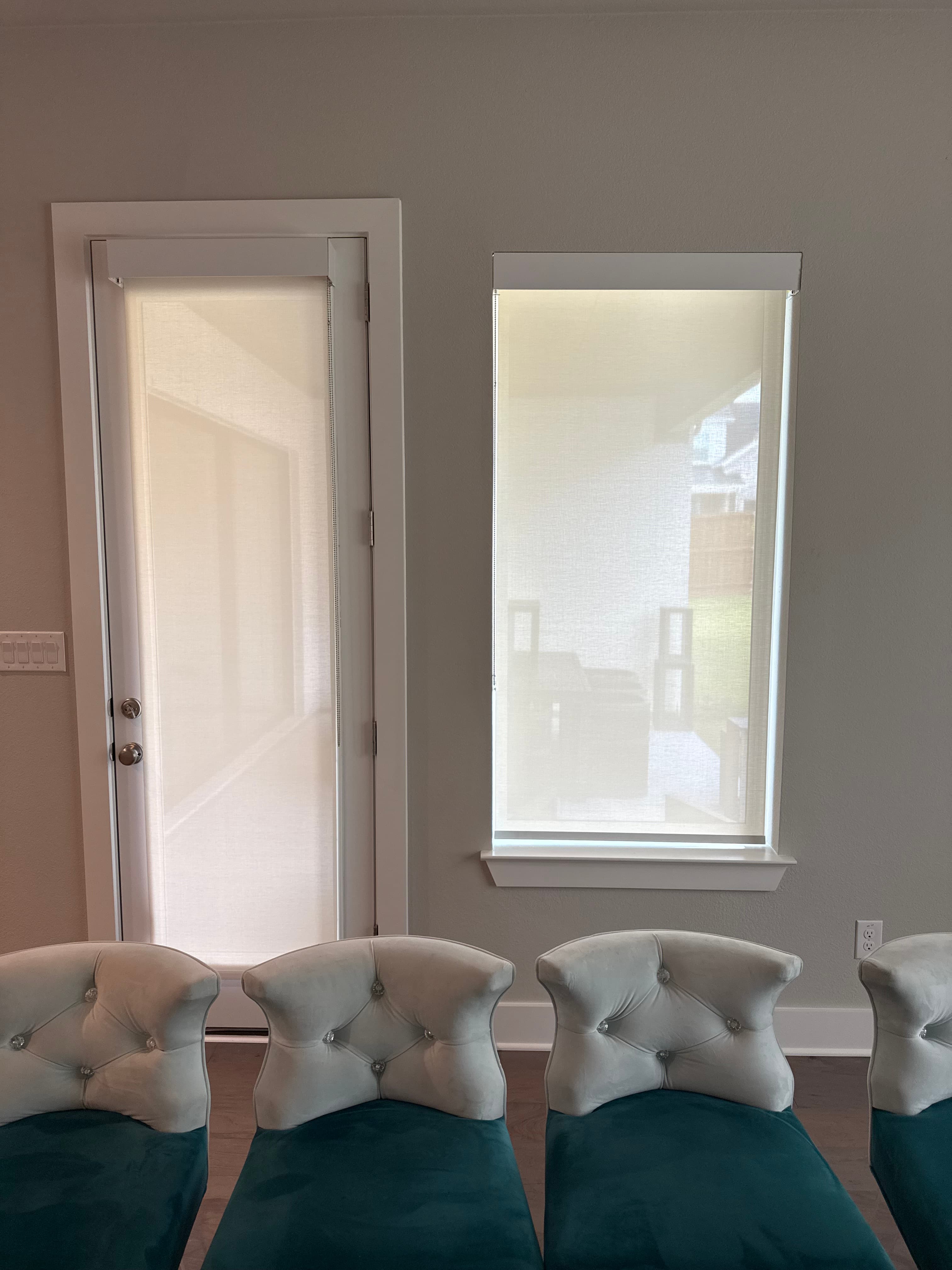
Green 3000 light filtering 3% Oyster/Beige · beaded chain · 4" fascia
What new owners buy first
Roller shades are what most new D.R. Horton owners choose first — clean fabric lines for open floorplans, patio doors, and primary bedrooms. Blackout and light-filtering fabrics are cut to your exact openings.
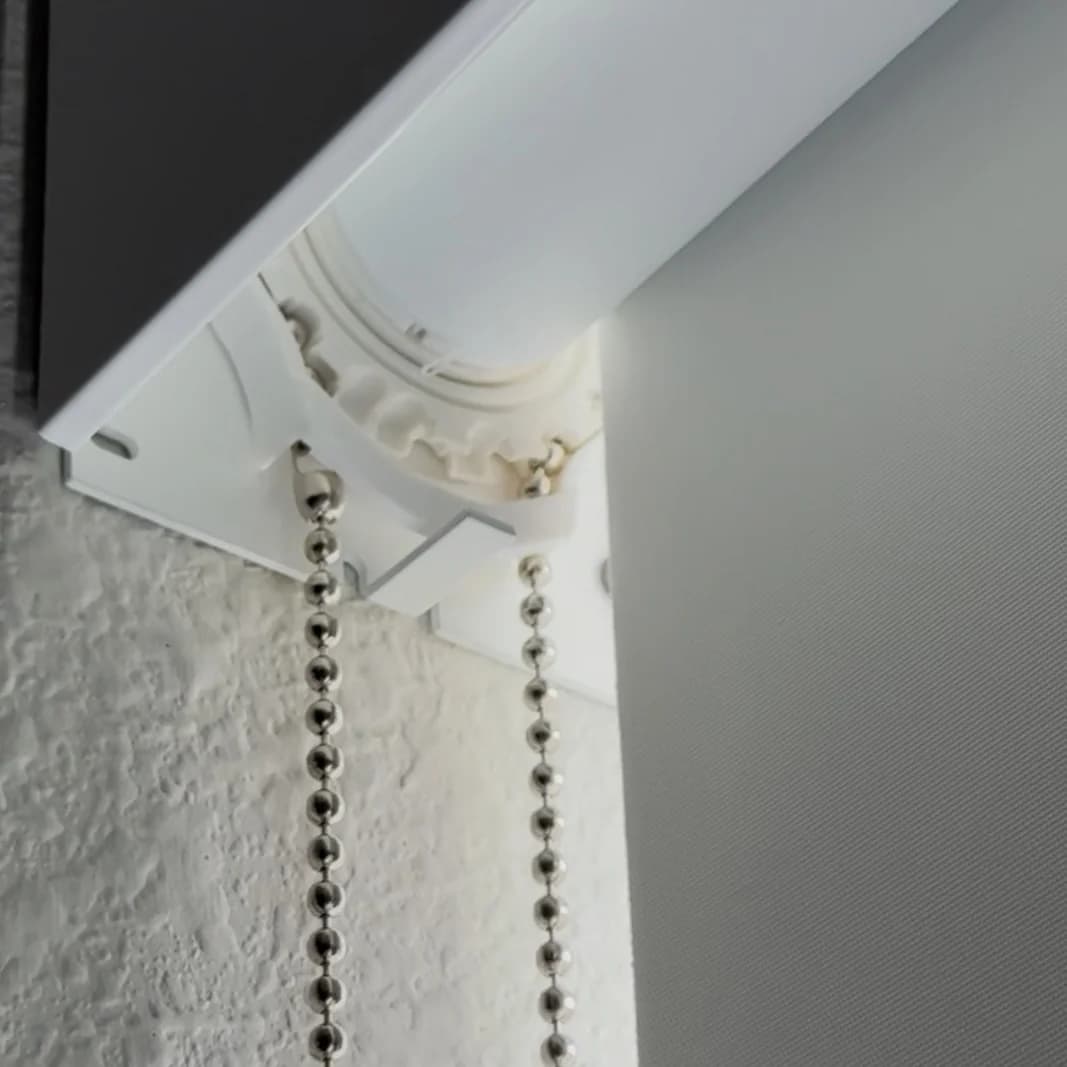
Blackout roller with beaded chain — room-darkening option for bedrooms and media rooms.
Most Common Blind Sizes
These are the D.R. Horton-adjacent opening sizes we ship most often. Each blind width links to available lengths:
| Window opening | Typical blind width | Common room |
|---|---|---|
| 30" | 29.5" | Townhome front / small bedroom |
| 35" | 34.5" | Bedrooms (most common) |
| 47" | 46.5" | Kitchen, dining, larger bedroom |
| 58" | 57.5" | Living and family rooms |
| 71" | 70.5" | Great room / wide picture window |
For the complete opening-to-blind chart, door and sidelight sizing, and room-by-room ranges, see our standard builder blind sizes guide.
Shop common production-home widths
These stocked widths match most new-build openings nationwide. Custom cut to your exact length — free shipping on every order.
Free whole-home planner
Plan your whole D.R. Horton home
Moving into a new D.R. Horton home or townhome with bare windows? Our free whole-home planner walks you through counting bedrooms, living areas, and patio doors, choosing faux wood or roller shades, and getting a ballpark estimate — especially useful when the same Horton window width repeats on multiple floors. No account required to start.
What D.R. Horton Homeowners Usually Buy
D.R. Horton buyers most often ask for roller shades — a clean look for open floorplans, great rooms, and patio doors. Faux wood blinds are another popular whole-home pick when you want one spec in every room. In Dallas–Fort Worth, schedule a free measure for a quote with installation included; outside DFW we ship nationwide for DIY or local install.
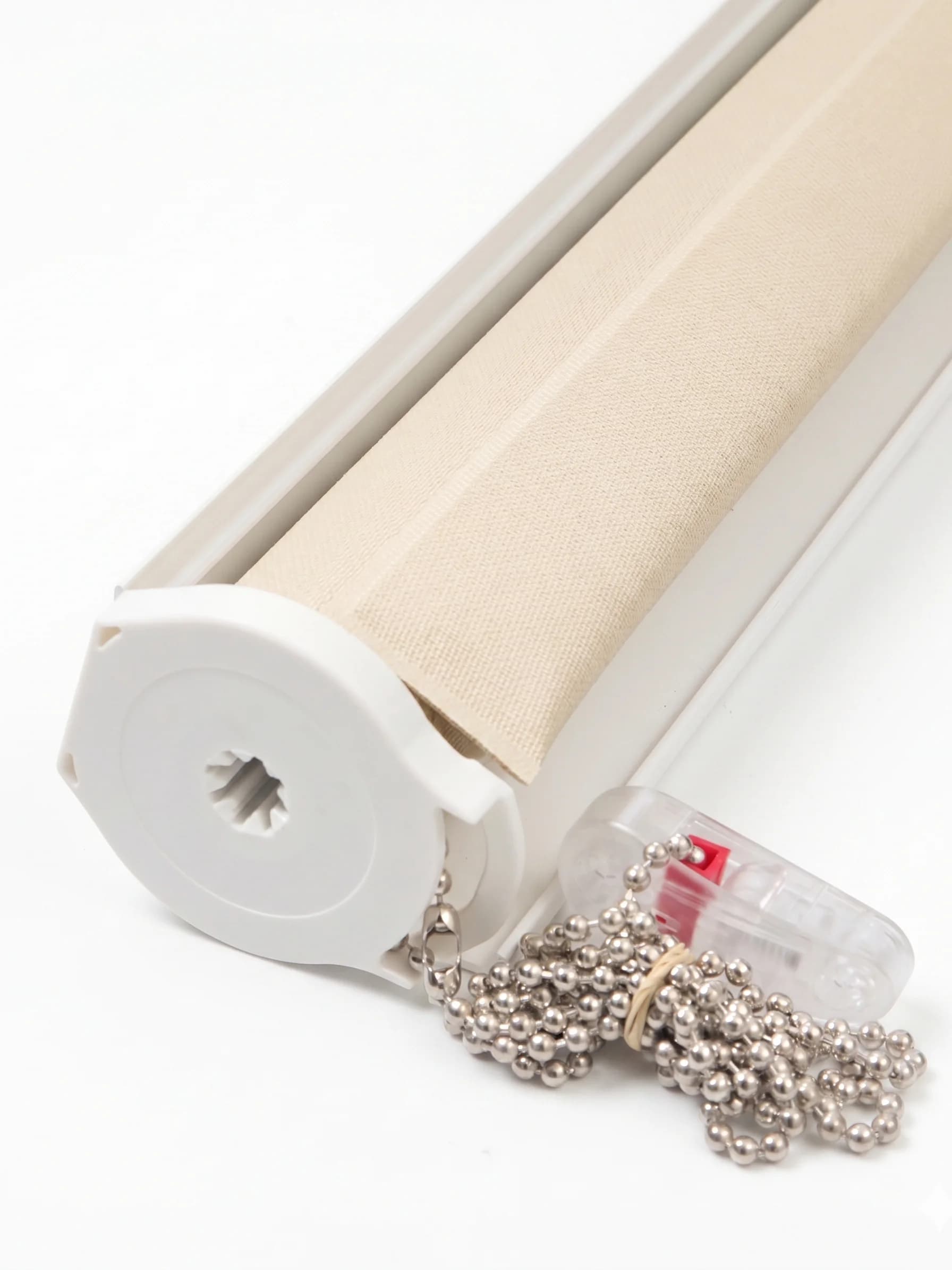
Roller shades
The top pick for D.R. Horton living areas, great rooms, and patio doors — blackout or light-filtering, cordless, and custom cut to your openings.
Shop roller shades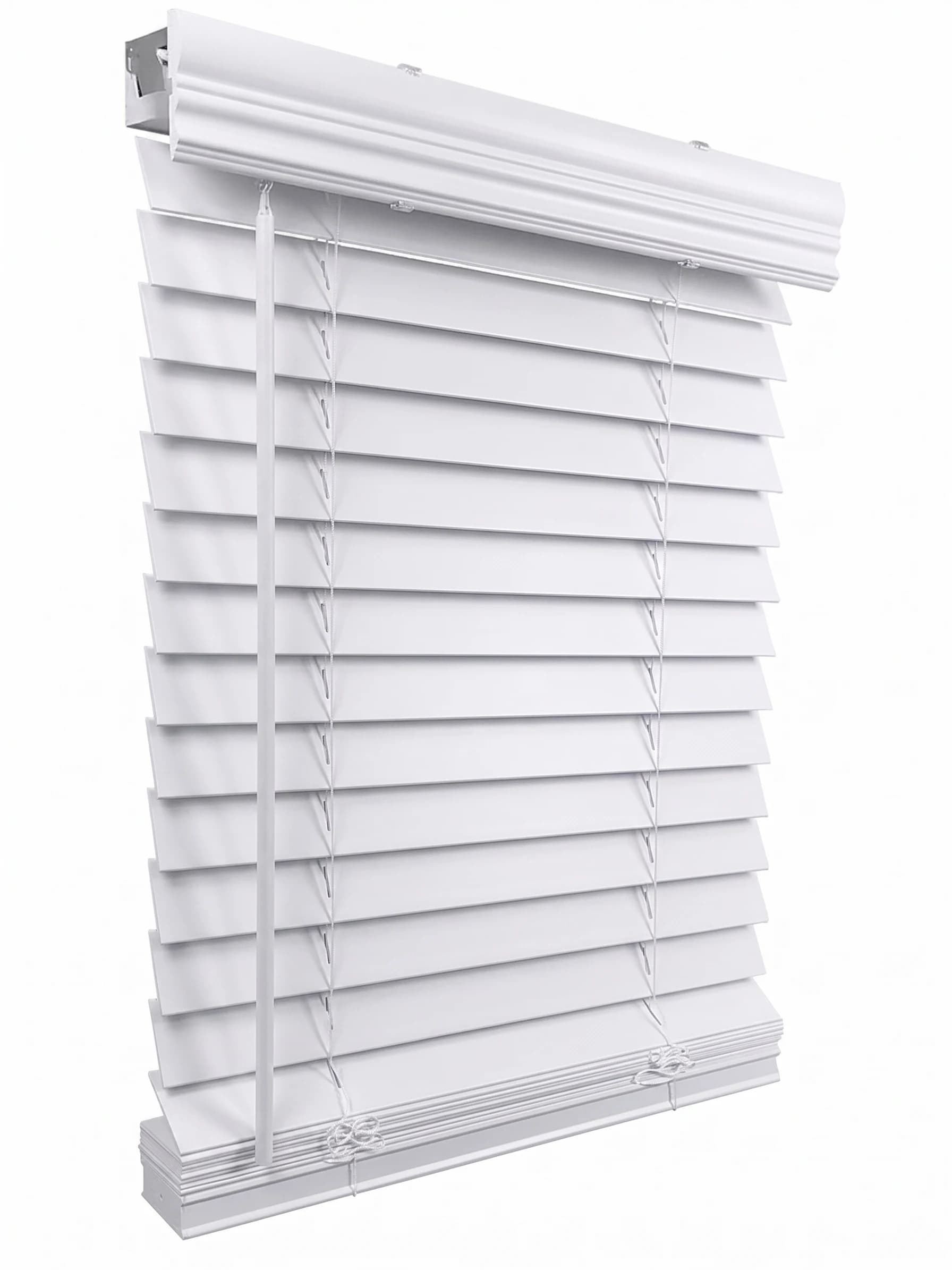
2" faux wood blinds
Still the best value for outfitting every bedroom at once — durable, moisture-resistant, and stocked in common builder widths.
Shop 2" faux wood blinds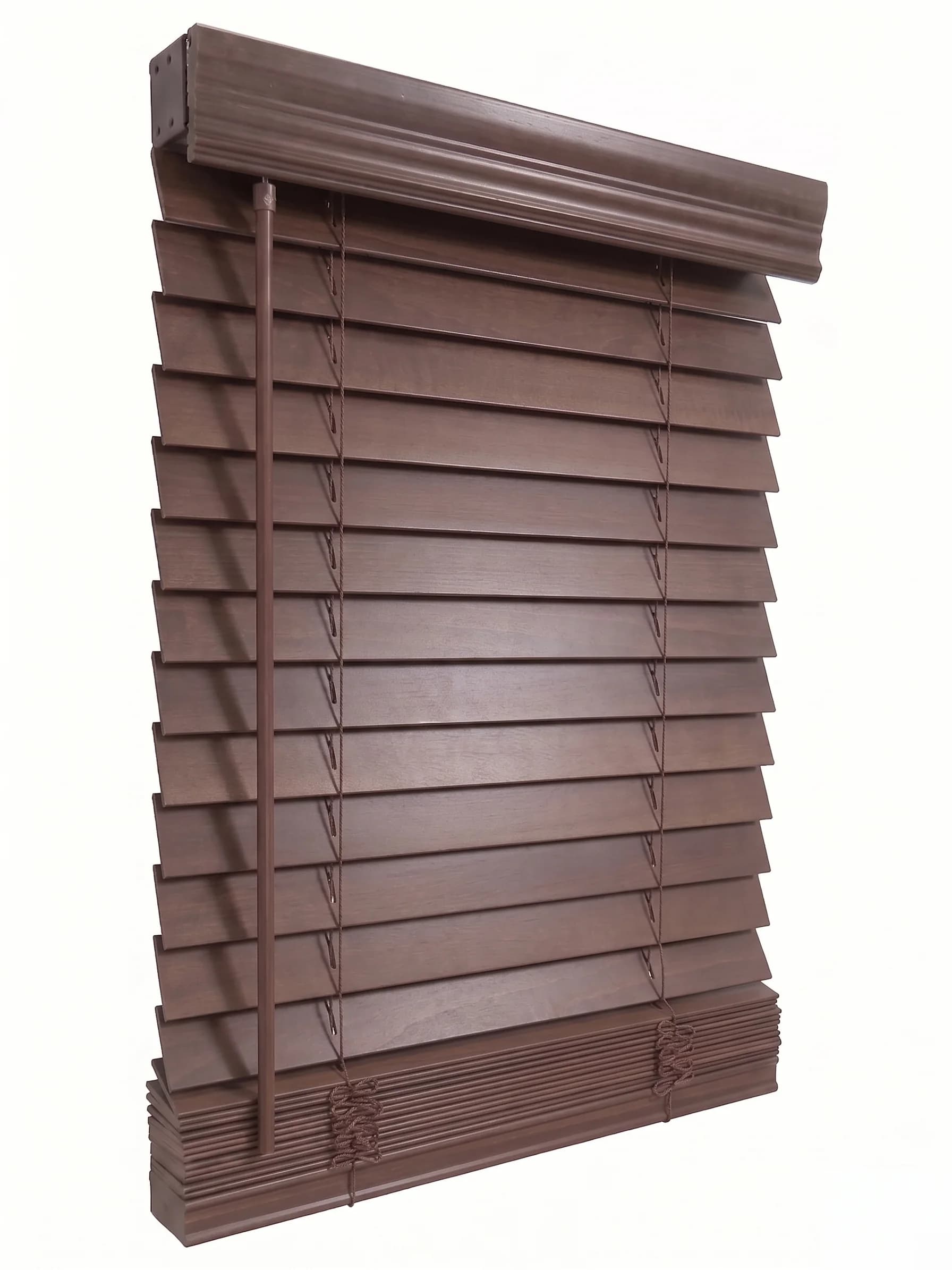
2" wood blinds
The premium upgrade for dining areas and offices — real hardwood with a richer finish than faux wood.
Shop 2" wood blinds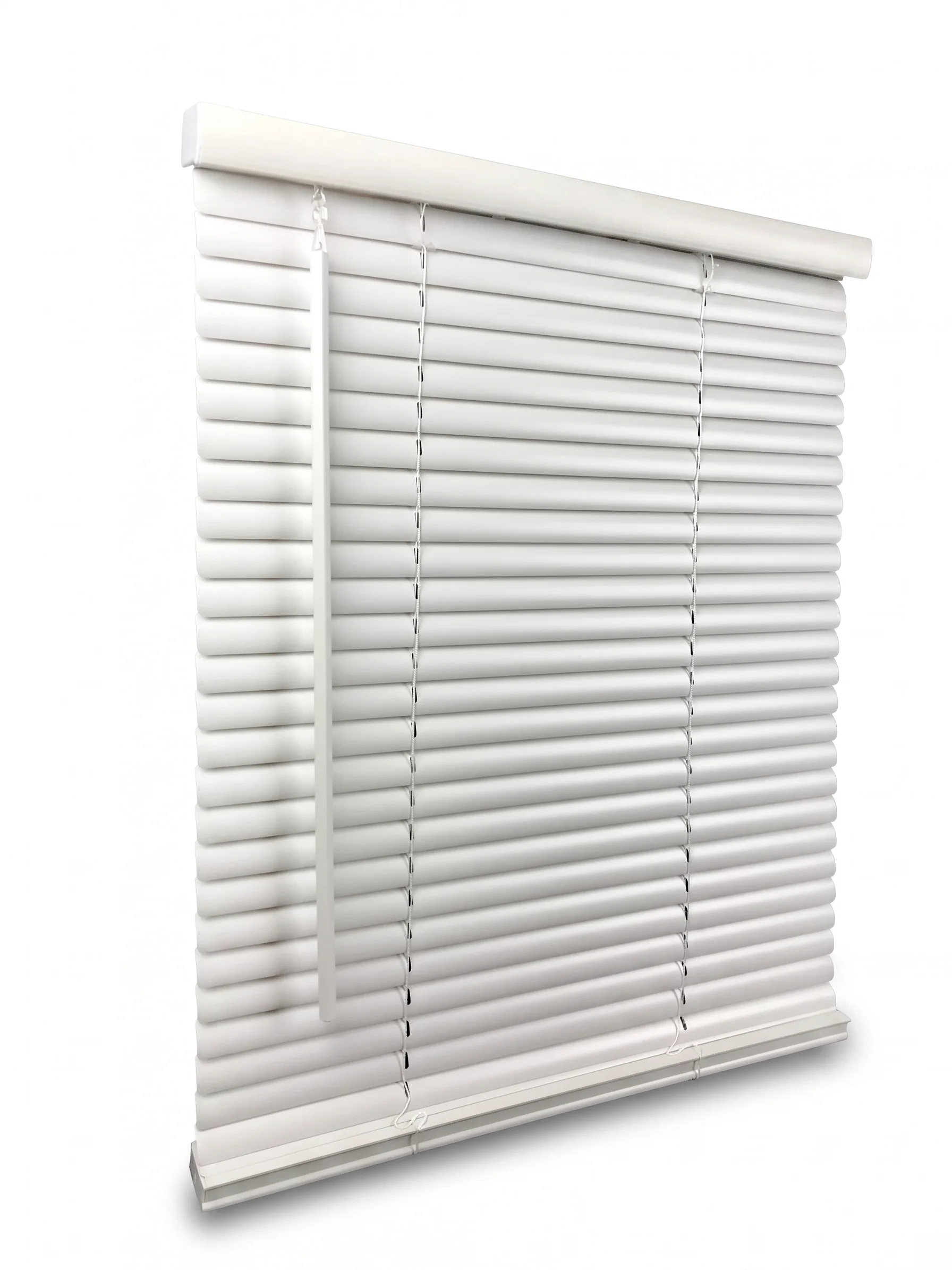
1" vinyl mini blinds
Budget-friendly for garages, laundry rooms, and secondary spaces.
Shop 1" vinyl mini blindsHow to Confirm Your Exact Size
The patterns above are a starting point — your specific floorplan and any builder upgrades can shift them, so always measure. Measure each opening's width at the top, middle, and bottom and height at left, center, and right. For an inside mount, report the exact opening and the factory deducts about ½" for clearance; for an outside mount, add 1.5–2" of overlap per side. Our measuring & installation guide has step-by-step instructions.
Frequently Asked Questions
What size blinds do I need for a D.R. Horton home?
Most D.R. Horton rooms fall into the same stocked width families: about 34.5" blinds for standard bedrooms, with 46.5" and 57.5" in larger living spaces. Horton townhome plans add narrower 23.5"–31.5" front windows. Measure each opening — Express, America’s Builder, and regional Horton communities vary by elevation and options.
Does D.R. Horton include blinds when you buy the home?
It depends on the community, price tier, and any options you selected at closing. Some D.R. Horton homes include basic window coverings or offer them as an upgrade; many deliver bare windows. Check your purchase agreement and D.R. Horton’s official documents and guides (linked below). If you need to outfit bare windows, Horton production-home sizes make it straightforward to order matching blinds afterward.
Do D.R. Horton Express homes come with blinds?
Express communities are priced for volume — many Horton Express homes deliver bare windows, while some include basic coverings or offer them as a design-center upgrade. Check your purchase agreement and Horton’s documents and guides (linked below), then measure each opening before ordering.
Are D.R. Horton townhome windows different from Horton single-family windows?
Horton often uses the same regional window modules across product types in a market — townhomes just place them differently (stacked floors, narrow fronts, smaller patios). The blind sizes you need are usually the same catalog widths; the room layout is what changes.
Can I order blinds for my entire D.R. Horton home at once?
Yes. In Dallas–Fort Worth, schedule a free in-home measure so we can confirm every opening, quote a precise fit, and include installation unless you prefer DIY. Outside DFW we ship custom-cut blinds nationwide — use our measuring guide or a local installer.
What blinds are best for a D.R. Horton home?
Roller shades are what most D.R. Horton owners choose first — especially for open floorplans, patio sliders, and primary bedrooms. 2" faux wood blinds are the other common whole-home pick when you want one durable spec in every room. Pick one product and color for the full house rather than mixing treatments room to room. In Dallas–Fort Worth, schedule a free measure for a quote with installation included; outside DFW we ship nationwide for DIY or local install.
Official D.R. Horton resources
We are not affiliated with D.R. Horton, Inc.. These links go to D.R. Horton's own homeowner and homebuyer sites — useful for warranties, move-in questions, and what may be included with your home. We do not control or endorse their content.
Related Homeowner Guides
More sizing and buying guidance for production homes and new construction.
Outfitting a new home?
Shop stocked builder widths, or have us do the whole home at once. In the Dallas–Fort Worth metro we can usually measure the same day and install within about five days, and we ship nationwide.